Entry Garden
Cousin Itt Acacia
Acacia cognata ACCOG01

A drought-tolerant shrub with a low-growing mounding form, the Cousin Itt Acacia has bushy branches dense with bright yellow-green foliage. Leaves are long, narrow, and flimsy. Because of its name, this acacia was a question on the popular quiz show Jeopardy in 2019.
- Plant Type: Evergreen shrub
- Water Needs: Low
- Mature Height: 2' - 3'
- Mature Width: 8" - 1'
- Sun Needed: Full Sun
- USDA Zones: 9 to 11
- Colors: Yellow, Green
- Bloom Color: Pale Yellow
- Bloom Season: Spring
- Native To: Australia
Sonoma Coast Yarrow
Achillea millefolium 'Sonoma Coast'

A self-sowing perennial that attracts butterflies and other pollinators, Sonoma Coast Yarrow has low-growing, ferny, aromatic leaves. Flat-topped flower umbels grow on 1' to 2' tall stems. They are tolerant of drought, wind, and heat.
- Plant Type: Perennial herb
- Water Needs: Low
- Mature Height: 6' - 12'
- Mature Width: 2' - 3'
- Sun Needed: Full Sun to Partial Shade
- USDA Zones: 4 to 8
- Colors: Dark Grey-green
- Bloom Color: Creamy White
- Bloom Season: Spring, Summer
- Native To: California
Sunburst Aeonium
Aeonium decorum 'Sunburst'

Sunburst Aeonium forms large, rounded rosettes in bright, cheerful colors. Leaves are variegated in creamy yellow, pale green, and copper-pink. Pups are peachy-yellow. Stalks of yellow flowers bloom from mature rosettes.
- Plant Type: Succulent
- Water Needs: Low
- Mature Height: 1' - 2'
- Mature Width: 3' - 5'
- Sun Needed: Full Sun
- USDA Zones: 9 to 11
- Colors: Varigated
- Bloom Color: Yellow
- Bloom Season: Summer
- Native To: Canary Islands
Ray of Light Foxtail Agave
Agave attenuata 'Ray of Light'

Ray of Light Foxtail Agave is a hybrid succulent that forms a spineless, variegated rosette. After several years, the mature plant produces a tall, arching flower spike.
- Plant Type: Succulent
- Water Needs: Low
- Mature Height: 4' - 5'
- Mature Width: 3' - 6'
- Sun Needed: Full Sun to Partial Shade
- USDA Zones: 9 to 11
- Colors: Varigated
- Bloom Color: Yellow-green
- Bloom Season: Infrequent
- Native To: Mexico
Artichoke Agave
Agave parryi Var. 'Truncata'
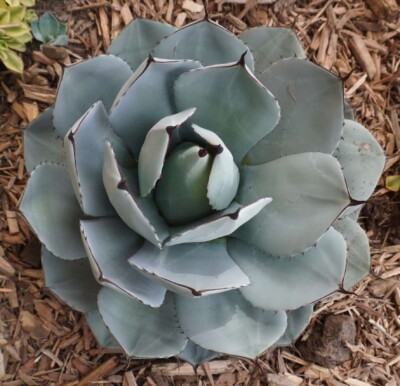
Artichoke Agave is a striking ornamental succulent that forms symmetrical rosettes of stiff leathery, grey-blue-green leaves. Needle-sharp, ruddy brown spines arm the leaf margins and leaf tips. Spreads by suckering offshoots. Mature plants produce tall flower spikes.
- Plant Type: Succulent
- Water Needs: Low
- Mature Height: 2' - 3'
- Mature Width: 3' - 4'
- Sun Needed: Full Sun
- USDA Zones: 6 to 9
- Colors: Grey, blue, green
- Bloom Color: Yellow
- Bloom Season: Infrequent
- Native To: Mexico
Fan Aloe
Aloe plicatilis
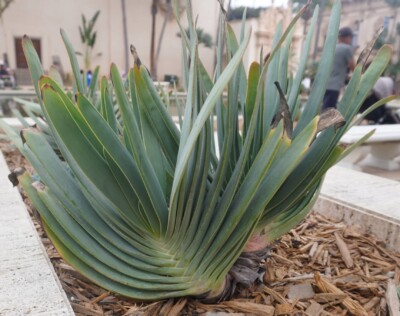
The Fan Aloe is a succulent shrub distinguished by its grey stems, each topped with a striking fan-shaped cluster of flat, slightly upcurved leaves. These blue‑grey leaves reach about 12 inches in length and end in rounded tips. As the plant matures, older leaves drop away cleanly, revealing an attractive smooth trunk.
- Plant Type: Succulent
- Water Needs: Low
- Mature Height: 4' - 8'
- Mature Width: 4' - 6'
- Sun Needed: Full Sun
- USDA Zones: 9 to 11
- Colors: Blue-grey
- Bloom Color: Red
- Bloom Season: Winter-spring
- Native To: South Africa
Arabian Aloe
Aloe rubroviolacea
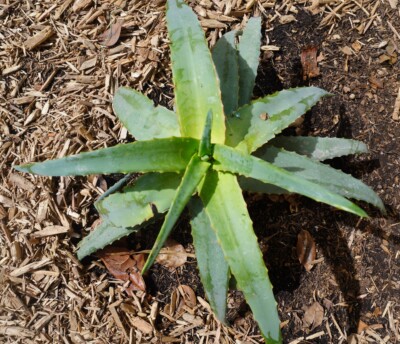
Arabian Aloe is a sprawling succulent that forms rosettes of thick, fleshy leaves atop slow-growing stems. Leaves flush maroon in winter. Tall clusters of tubular orange-red flowers appear in fall to winter.
- Plant Type: Succulent
- Water Needs: Low
- Mature Height: 2' - 3'
- Mature Width: 4' - 6'
- Sun Needed: Full Sun
- USDA Zones: 9 to 11
- Colors: Blue-grey
- Bloom Color: Red-purple
- Bloom Season: Fall-winter
- Native To: Arabian Peninsula
Pink African Daisy
Arctotis Spc.
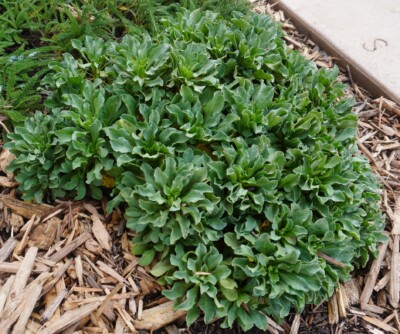
African daisy is a genus of at least 60 annual or perennial flowering plants in the daisy family. The plants grow 1 to 2 feet tall in a mounding or spreading habit. They prefer full sun in well-drained sandy or rocky soils.
- Plant Type: Herbaceous perennial
- Water Needs: Low
- Mature Height: 1' to 2'
- Mature Width: 1' to 1'
- Sun Needed: Full Sun
- USDA Zones: 9a to 11b
- Colors: Green
- Bloom Color: Gold/yellow, Orange, Pink, Red/burgandy, White
- Bloom Season: Fall-summer
- Native To: Southern Africa
Bismarck Palm
Bismarckia nobilis

Bismarck Palm makes a fine specimen or street tree, or an accent in a sunny garden. Its silver-blue leaves really pop in the landscape when planted near dark green-leaved plants.
- Plant Type: Perennial tree
- Water Needs: Low
- Mature Height: 30' - 40'
- Mature Width: 10' - 15'
- Sun Needed: Full Sun
- USDA Zones: 8b to 10b
- Colors: Silver-blue
- Bloom Color: Brown-copper
- Bloom Season: Seasonal Bloomer
- Native To: Madagascar
Mexican Blue Palm
Brahea Armata
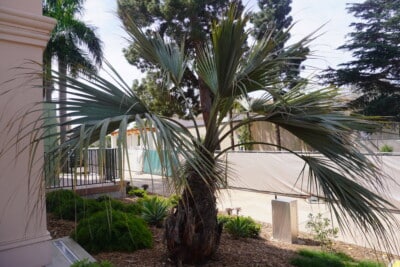
The Mexican Blue Palm is a slow-growing fan palm with a solitary stout trunk. The striking fan-shaped leaves are attached on long stalks armed with yellow teeth. In the summer, the spectacular creamy-colored flowers cluster on 15-foot-long inflorescences, which rise up and arch over and down from the middle of the crown of leaves.
- Plant Type: Evergreen palm
- Water Needs: Low
- Mature Height: 25' - 40'
- Mature Width: 6' - 8'
- Sun Needed: Full Sun to Partial Shade
- USDA Zones: 9 to 11
- Colors: Silver-blue
- Bloom Color: Cream
- Bloom Season: Summer
- Native To: Baja California
Angel's Trumpet 'Charles Grimaldi'
Brugmansia x Cubensis 'Charles Grimaldi'
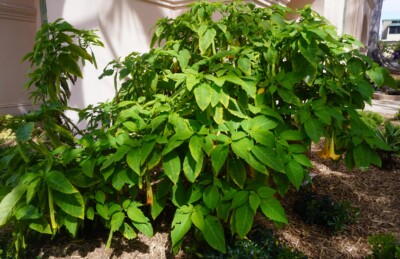
Angel's Trumpet is a fast-growing shrub or small tree with woody bark. Its flowers are akin to large, drooping trumpets that emit a strong fragrance, especially in the evening, attracting both hummingbirds and moths. They benefit from a hard cut back or pruning for shape in the spring, but use care working with them as all parts of these plants are poisonous.
- Plant Type: Evergreen shrub
- Water Needs: Medium
- Mature Height: 8' - 12'
- Mature Width: 6' - 12'
- Sun Needed: Full Sun to Partial Shade
- USDA Zones: 10 to 11
- Colors: Medium-green
- Bloom Color: Golden-orange
- Bloom Season: Summer to Fall
- Native To: Andes
Green Carpet Natal Plum
Carissa macrocarpa 'Green Carpet'

Green Carpet Natal Plum forms a dense mat of attractive, glossy emerald-green foliage set on spiny stems, accented with sweetly-fragrant, star-shaped bright-white flowers. Flowers are followed by small, oval-shaped edible fruit that ripen to bright-red in summer. Its sprawling form makes it well-suited as a low-growing hedge or dense-growing groundcover.
- Plant Type: Shrub, ground cover
- Water Needs: Low to moderate
- Mature Height: 12" - 15"
- Mature Width: 4' - 5'
- Sun Needed: Full Sun to Partial Shade
- USDA Zones: 9 to 11
- Colors: Green
- Bloom Color: White
- Bloom Season: All year
- Native To: Africa
Dwarf Cape Rush
Chondropetalum tectorum
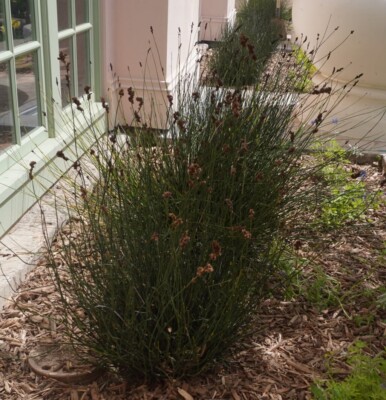
Dwarf Cape Rush is a compact marsh plant with upright, jointed matte blue-green stems that grow as wide as the diameter of a pencil. Each joint is enveloped by an ornamental papery bracht that blends hues of cream, rust, scarlet, and brown. Dark brown flower heads grow at the tips of the foliage.
- Plant Type: Grass-like
- Water Needs: Low
- Mature Height: 2' - 3'
- Mature Width: 3' - 4'
- Sun Needed: Full Sun to Partial Shade
- USDA Zones: 8 to 10
- Colors: Blue-green
- Bloom Color: Brown
- Bloom Season: Summer-fall
- Native To: South Africa
Rock Purslane
Cistanthe grandiflora

Rock Purslane grows in clumps and produces pink, or sometimes white, flowers at the end of long stems. The flowers stalks can rebloom, so do not deadhead until all the blooms are completely spent.
- Plant Type: Succulent
- Water Needs: Low
- Mature Height: 1' - 1.5'
- Mature Width: 3'
- Sun Needed: Full Sun
- USDA Zones: 3a to 9b
- Colors: Green
- Bloom Color: Pink, White
- Bloom Season: Spring, Summer
- Native To: Chile
Cycad
Cycas sp.

The genus Cycas includes 113 species of palm-like cycads. They are native to equatorial regions around the world. Some of these species will grow up to 40 feet tall, while others remain compact enough to be grown as houseplants. The leaves uncoil similarly to ferns and form a whorled arrangement at the top of the trunk.
- Plant Type: Cycad
- Water Needs: Dependent on species
- Mature Height: Will depend on specific species
- Mature Width: Will depend on specific species
- Sun Needed: Full Sun to Partial Shade
- USDA Zones: 9a to 11b
- Colors: Medium Green
- Bloom Color: Non-flowering
- Bloom Season: Non-flowering
- Native To: Equatorial regions of Asia, Africa, India, Australia, South America and some Pacific Islands
Giant Chalk Dudleya
Dudleya brittonii
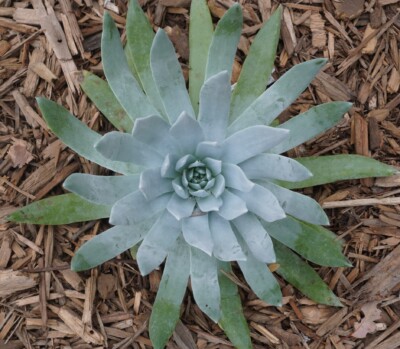
Giant Chalk Dudleya forms lotus-like rosettes of fleshy leaves which are coated in a fine chalky white powder. Stalks of yellow flowers appear in spring and summer, attracting hummingbirds. Avoid overhead watering.
- Plant Type: Succulent
- Water Needs: Low
- Mature Height: 1' - 2'
- Mature Width: 1' - 2'
- Sun Needed: Full Sun to Partial Shade
- USDA Zones: 9 to 11
- Colors: Chalky White
- Bloom Color: Yellow
- Bloom Season: Spring, summer
- Native To: Baja California
Golden Barrel Cactus
Echinocactus grusonii

Golden Barrel Cactus is widely recognized for its spherical shape. The spines are densely packed and are a vibrant gold color, providing a striking contrast to the green body of the cactus. It is well-suited to the hot and dry conditions of its native habitat, making it an excellent choice for desert gardens in regions with similar climates.
- Plant Type: Cactus
- Water Needs: Low
- Mature Height: 1' - 4'
- Mature Width: 2' - 3'
- Sun Needed: Full Sun
- USDA Zones: 8 to 10
- Colors: Green-gold
- Bloom Color: Yellow
- Bloom Season: Spring-summer
- Native To: Queretaro and Hidalgo, Mexico
Sea Breeze Seaside Daisy
Erigeron glaucus 'Sea Breeze'

Sea Breeze Seaside Daisy has a low, mounding habit. Aster-like flowers bloom from spring to summer, opening up to 3 inches across. Threadlike petals appear in lavender-pink with yellow button-centers that attract all sorts of pollinators. Performs best in coastal gardens.
- Plant Type: Evergreen perennial
- Water Needs: Medium
- Mature Height: 6" - 12"
- Mature Width: 3' - 5'
- Sun Needed: Partial Shade
- USDA Zones: 8 to 10
- Colors: Grey-green
- Bloom Color: Lavender-pink
- Bloom Season: Spring-fall
- Native To: Coastal California and Oregon
Miners Merlot Spurge
Euphorbia 'Miners Merlot'

Miners Merlot Spurge is ideal as an accent plant or when used in groupings throughout garden beds and containers. It's perfect for rock gardens and a fine addition to a Xeriscape. The long-lasting lime-colored flowers are excellent for cutting and use in vases, but be careful to avoid getting the sap from cut stems on your skin.
- Plant Type: Evergreen perennial
- Water Needs: Low-medium
- Mature Height: 18" - 24"
- Mature Width: 18" - 24"
- Sun Needed: Full Sun to Partial Shade
- USDA Zones: 5 to 8
- Colors: Burgandy, blackish, olive green
- Bloom Color: Lime green
- Bloom Season: Late Summer to late Fall
- Native To: Chance Hybrid developed in United States
Moreton Bay Fig
Ficus macrophylla

Like the magnificent specimens in Balboa Park, Moreton Bay figs are far too large for home gardens or street plantings, but they make extraordinary park trees. Mature individuals develop massive buttressing roots that radiate from the trunk, and in more humid climates they may also produce dramatic aerial roots.
- Plant Type: Evergreen
- Water Needs: Medium
- Mature Height: 60'
- Mature Width: 70' - 75'
- Sun Needed: Full Sun
- USDA Zones: 1 to 9
- Colors: Glossy dark green leaves above, Brown below
- Bloom Color: Inconspicuous flowers, purple or yellow edible fruit
- Bloom Season: Summer
- Native To: Eastern Australia
Globe Daisy
Graptopetalum paraguayense CV. Bronze

Native to Mexico, the Globe Daisy is very popular among succulent enthusiasts for its rosette-shaped foliage and ease of care. The color of Graptopetalum paraguayense depends on the heat and sun it receives, with blue-tinged leaves in the shade and pink edges in sunny and dry conditions.
- Plant Type: Succulent
- Water Needs: Low
- Mature Height: 3"
- Mature Width: 5"
- Sun Needed: Partial Shade
- USDA Zones: 9a to 11b
- Colors: Gray, Pink
- Bloom Color: White, Pink
- Bloom Season: Summer, Fall
- Native To: Tamaulipas, Mexico
Pink Trumpet Tree
Handroanthus impetiginosus
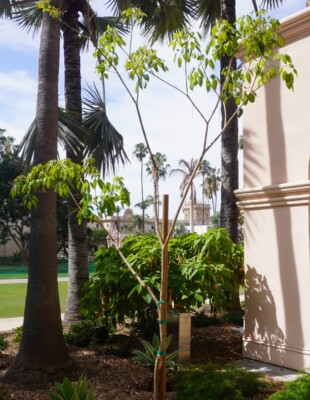
The Pink Trumpet Tree has a gray fissured trunk and lobed leaves divided into as many as 7 leaflets radiating outward. The pink trumpet flowers have a white throat with yellow stripes and bloom in large clusters in the spring, just before the new foliage emerges.
- Plant Type: Semi-evergreen tree
- Water Needs: Medium
- Mature Height: 20' - 30'
- Mature Width: 10' - 20'
- Sun Needed: Full Sun
- USDA Zones: 8b to 11
- Colors: Grey-green
- Bloom Color: Pink, White
- Bloom Season: Spring
- Native To: Mexico
Kentia Palm
Howea forsterian
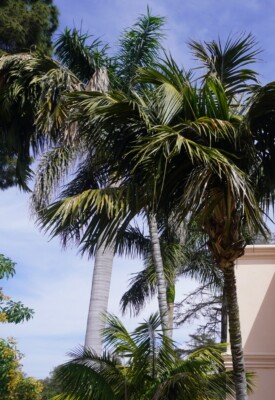
The Kentia palm can be grown as a houseplant in temperate climates and requires little light. It can also adapt to sunny locations and it is used as a landscaping plant in Southern California.
- Plant Type: Evergreen Perennial
- Water Needs: Medium
- Mature Height: 4'
- Mature Width: 4'
- Sun Needed: Partial Shade
- USDA Zones: 9b to 11b
- Colors: Green
- Bloom Color: White
- Bloom Season: Fall, Winter
- Native To: Australia
Sweetshade
Hymenosporum flavum
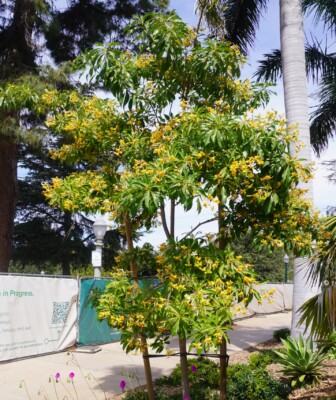
A slender evergreen tree with flowers resembling the scent of Frangipani blossoms (Plumeria). Sweetshade is often used in street plantings or other areas where a narrow upright tree is needed.
- Plant Type: Evergreen tree
- Water Needs: Low
- Mature Height: 25'- 40'
- Mature Width: 15' - 20'
- Sun Needed: Partial Shade
- USDA Zones: 9 to 11
- Colors: Green
- Bloom Color: Yellow
- Bloom Season: Spring, Summer
- Native To: Queensland, New South Wales Australia
Silver Fox Mangave
Mangave 'Silver Fox'
Mangave 'Silver Fox' is a silver-gray succulent that starts off as a solitary rosette and with time it pups out to form a cluster of rosettes. The leaves are covered with a thick, waxy coating and are serrated along the margins. When it flowers, it sends up a tall stalk with bright yellow flowers at the top.
- Plant Type: Evergreen succulent
- Water Needs: Low
- Mature Height: 1'
- Mature Width: 2' - 3'
- Sun Needed: Full Sun
- USDA Zones: 9 to 11
- Colors: Silver-grey
- Bloom Color: Yellow
- Bloom Season: Infrequent
- Native To: Mexico
Wheeler's Dwarf Pittosporum
Pittosporum tobira 'Wheeler's Dwarf'
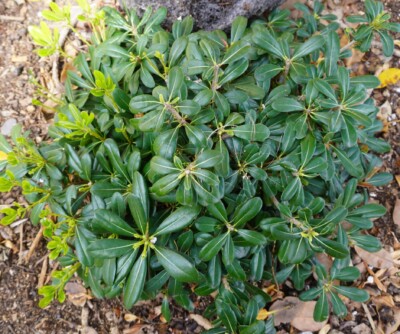
Wheeler's Dwarf Pittosporum is wonderful for the front of shrub borders and ideal for patios and terraces. A very adaptable shrub that will tolerate seaside conditions, inland heat, and alkaline soils. It is good for a low border planting or as a large scale groundcover.
- Plant Type: Evergreen shrub
- Water Needs: Medium
- Mature Height: 3' - 4'
- Mature Width: 4' - 5'
- Sun Needed: Full Sun to Partial Shade
- USDA Zones: 8b to 11
- Colors: Green
- Bloom Color: White
- Bloom Season: Spring
- Native To: China
Coffeeberry
Rhamnus californica

The Coffeeberry is a California native shrub that provides a habitat for wildlife and is drought-tolerant once established. Despite coming from the coffee-making genus, the Coffeeberry can be poisonous and is not recommended for consumption.
- Plant Type: Evergreen Shrub
- Water Needs: Low
- Mature Height: 6' - 8'
- Mature Width: 6' - 8'
- Sun Needed: Full Sun
- USDA Zones: 7 to 10
- Colors: Green, Red
- Bloom Color: White
- Bloom Season: Spring
- Native To: California
Indian Hawthorn
Rhaphiolepis 'Majestic Beauty'

Indian Hawthorn has grey-brown fissured bark with dark green leathery leaves. Foliage emerges bronze. Light fragrant masses of pink flowers bloom in clusters at branch tips, followed by dark blue fruits.
- Plant Type: Evergreen shrub or small tree
- Water Needs: Medium
- Mature Height: 15' - 25'
- Mature Width: 8' - 10'
- Sun Needed: Full Sun to Partial Shade
- USDA Zones: 7 to 11
- Colors: Bronze-green
- Bloom Color: Pink
- Bloom Season: Fall, Winter, Spring
- Native To: Horticultural Hybrid
Coppertone Stonecrop
Sedum Nussbaumerianum

A stemmed grower with orange and yellow foliage, Coppertone Stonecrop's leaf tips and margins deepen to a vibrant orange when grown in full sun. It has pointed upturned leaves and grows tall stems that eventually bend and spill nicely out of containers. After years of growth, any tall leggy plants are simple to prune and replant as stem cuttings.
- Plant Type: Succulent
- Water Needs: Low
- Mature Height: Less than 1'
- Mature Width: 2' - 3'
- Sun Needed: Full Sun
- USDA Zones: 9 to 11
- Colors: Orange-yellow
- Bloom Color: White
- Bloom Season: Winter-spring
- Native To: Mexico
Deodar Cedar
Cedrus deodara

The Deodar Cedar is a large evergreen conifer commonly used as a specimen tree for expansive lawns or pruned into screens and hedges. It is the most pendulous of the true cedars, characterized by drooping branchlets and gracefully nodding branch tips.
- Plant Type: Evergreen tree
- Water Needs: Medium
- Mature Height: 40' to 50'
- Mature Width: 39' to 40'
- Sun Needed: Full Sun
- USDA Zones: 7 to 8
- Colors: Green needles
- Bloom Color: Non-flowering
- Bloom Season: Non-flowering
- Native To: Himalayas
Windmill Palm
Trachycarpus fortunei
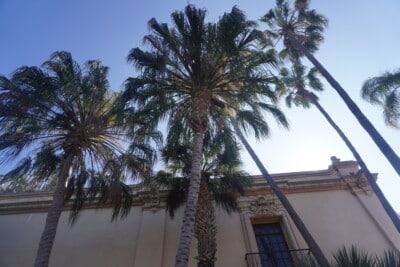
Windmill Palms can be grown in large containers. When no protection from strong wind is provided, the leaves tend to tear. The damage is not lethal, but it is unsightly. The dark brown bark is fibrous and often used in the making of rope, brooms, mats, and cloth in China.
- Plant Type: Perennial evergreen
- Water Needs: Low
- Mature Height: 8' - 10'
- Mature Width: 4' - 6'
- Sun Needed: Full Sun to Partial Shade
- USDA Zones: 7a to 11b
- Colors: Green, Brown
- Bloom Color: Gold, Yellow
- Bloom Season: Summer
- Native To: China
Mexican Fan Palm
Washingtonia robusta
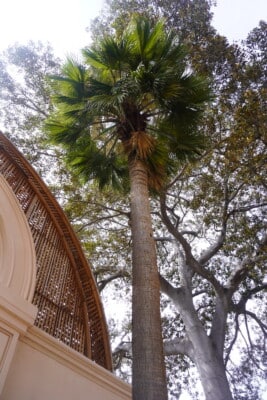
The Mexican Fan Palm has a columnar trunk with a round crown of fan-shaped leaves. Rather than dropping off, dead leaves fold down against the trunk giving it a dense skirt. These are sometimes removed to prevent a fire hazard, but if left in place, they are excellent roosts for beneficial wildlife.
- Plant Type: Evergreen tree
- Water Needs: Low
- Mature Height: 50' - 100'
- Mature Width: 8' - 10'
- Sun Needed: Full Sun to Partial Shade
- USDA Zones: 9a to 11b
- Colors: Brown, Gold, Red
- Bloom Color: Gold, Yellow, White
- Bloom Season: Summer
- Native To: Northwest Mexico
Giant Chain Fern
Woodwardia fimbriata
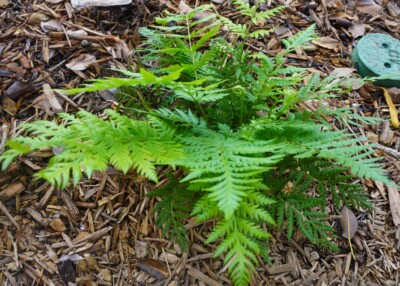
Giant Chain Fern is the largest fern in North America. It has arching dark-green fronds and can be either evergreen or summer deciduous, depending on its growing conditions. It prefers at least some shade and some moisture, but does not like continually wet soil. It can be cut back to the ground at the end of winter.
- Plant Type: Evergreen or Summer Deciduous Fern
- Water Needs: Moderate
- Mature Height: 4' - 6'
- Mature Width: 4' - 6'
- Sun Needed: Full Sun to Partial Shade
- USDA Zones: 9 to 10
- Colors: Green
- Bloom Color: N/A
- Bloom Season: N/A
- Native To: Western North America