West Water-Wise Garden
Twin Flowered Agave
Agave geminiflora
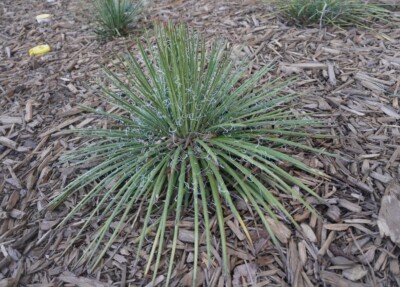
Agave geminiflora has narrow dark green leaves that all grow outwards from the center of the plant. Its flowers grow in pairs that form from a long spike. The name 'geminiflora', means "twin flowered" and is a reference to the fact that the flowers grow in pairs.
- Plant Type: Evergreen succulent
- Water Needs: Low
- Mature Height: 2' - 3'
- Mature Width: 2' - 4'
- Sun Needed: Full Sun to Partial Shade
- USDA Zones: 9 to 11
- Colors: Green
- Bloom Color: Yellow
- Bloom Season: Infrequent
- Native To: Mexico
Bitter Tree Aloe
Aloe Ferox
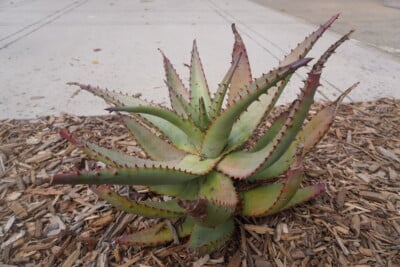
A large plant with broad, bold foliage, Bitter Tree Aloe has candelabra-like spikes. The spikes have dark reddish orange flowers with golden to white tips that are tightly held against the flowering stem. The plant's sap is used internally as a laxative and externally as a treatment for skin ailments, similar in use to Aloe vera.
- Plant Type: Evergreen succulent
- Water Needs: Low
- Mature Height: 11 ' -15'
- Mature Width: 5'
- Sun Needed: Full Sun
- USDA Zones: 9 to 11
- Colors: Grey-green
- Bloom Color: Red, Orange, Yellow, White
- Bloom Season: January- February or May-August
- Native To: South Africa
Fan Aloe
Aloe plicatilis
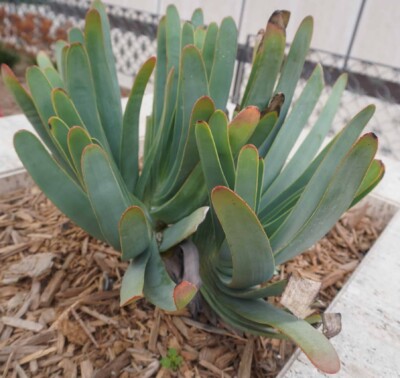
The Fan Aloe is a succulent shrub distinguished by its grey stems, each topped with a striking fan-shaped cluster of flat, slightly upcurved leaves. These blue‑grey leaves reach about 12 inches in length and end in rounded tips. As the plant matures, older leaves drop away cleanly, revealing an attractive smooth trunk.
- Plant Type: Succulent
- Water Needs: Low
- Mature Height: 4' - 8'
- Mature Width: 4' - 6'
- Sun Needed: Full Sun
- USDA Zones: 9 to 11
- Colors: Blue-grey
- Bloom Color: Red
- Bloom Season: Winter-spring
- Native To: South Africa
Orange Kangaroo Paw
Anigozanthos x 'Orange Cross'
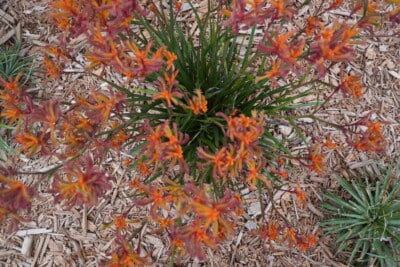
The Orange Kangaroo Paw has strappy leaves, with dark orange flowers on multiple branches that resemble the paw of a kangaroo, flowering in the spring. It makes for an ideal landscape or container plant, preferring well-drained soil.
- Plant Type: Evergreen perennial
- Water Needs: Moderate
- Mature Height: 4' to 5'
- Mature Width: 2' to 3'
- Sun Needed: Full Sun
- USDA Zones: 9a to 11b
- Colors: Green
- Bloom Color: Orange
- Bloom Season: Spring and Summer
- Native To: Australia
Amole
Beschorneria yuccoides

The Amole is a clump-forming, stemless yucca in the agave family with grey-green stiff leathery leaves and attractive flowers. It works well in containers or planted in small groups along a shrub border. Its architectural shape makes it a lovely specimen plant with soft leaves and it is right at home in a drought-tolerant rock garden.
- Plant Type: Succulent
- Water Needs: Low
- Mature Height: 4' to 6'
- Mature Width: 4' to 6'
- Sun Needed: Full Sun
- USDA Zones: 8a to 11b
- Colors: Grey-green
- Bloom Color: Green, Pink, Red
- Bloom Season: Summer
- Native To: Mexico
Javanese Bishopwood
Bischofia javanica
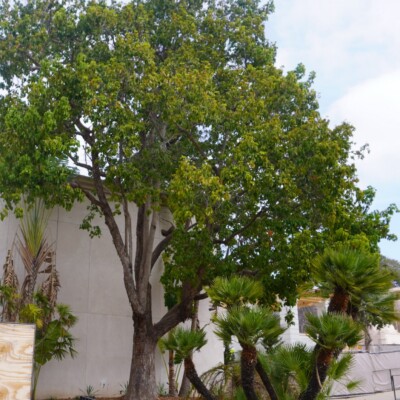
Growing in full sun on various soil types, Javanese Bishopwood grows quickly and easily. The dense rounded crown and thick trunk makes Bishopwood a popular shade tree. It grows well in confined urban soil spaces, however, the fruit is considered messy and stains walks when it drops to the ground, and aggressive roots can lift sidewalks.
- Plant Type: Semi-evergreen tree
- Water Needs: Moderate
- Mature Height: 30' - 50'
- Mature Width: 25' - 35'
- Sun Needed: Full Sun to Partial Shade
- USDA Zones: 10a to 11
- Colors: Green to Bronze-green
- Bloom Color: Green-yellow
- Bloom Season: Early fall
- Native To: Tropical Asia, Pacific Islands
Bismarck Palm
Bismarckia nobilis
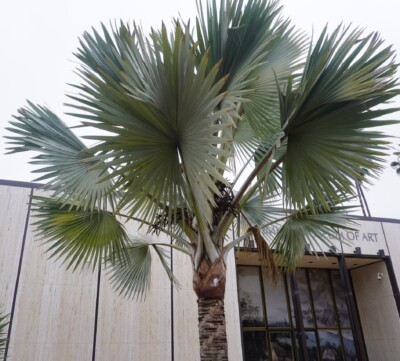
Bismarck Palm makes a fine specimen or street tree, or an accent in a sunny garden. Its silver-blue leaves really pop in the landscape when planted near dark green-leaved plants.
- Plant Type: Perennial tree
- Water Needs: Low
- Mature Height: 30' - 40'
- Mature Width: 10' - 15'
- Sun Needed: Full Sun
- USDA Zones: 8b to 10b
- Colors: Silver-blue
- Bloom Color: Brown-copper
- Bloom Season: Seasonal Bloomer
- Native To: Madagascar
Green Carpet Natal Plum
Carissa macrocarpa 'Green Carpet'

Natal plum is an easy-to-grow, spiny evergreen perennial shrub with dense leathery green leaves, fragrant white flowers, and showy edible plum-like fruits. It makes for good ground cover or hedge.
- Plant Type: Evergreen shrub
- Water Needs: Low
- Mature Height: 5' - 7'
- Mature Width: 12" - 18"
- Sun Needed: Full Sun
- USDA Zones: 9a - 10b
- Colors: Fruit: Green, Purple/lavender, Red/burgandy; Leaf: Brown/copper
- Bloom Color: White
- Bloom Season: Spring
- Native To: Kenya to South Africa
Medditerranian Fan Palm
Chamaerops humilis
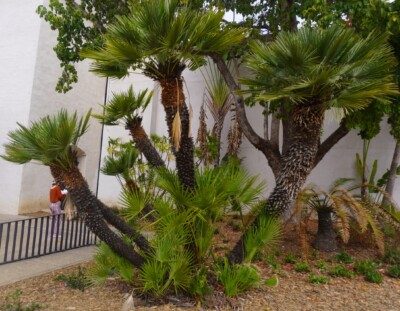
Mediterranean Fan Palm is a clustering palm that has stocky trunks and a large, bushy, mounded form. It makes a nice barrier or group accent at the corner of the landscape. Use in containers for patio, deck or foundation areas. It's often used in commercial landscapes where its slow growth needs little maintenance. It may even be grown indoors as a houseplant.
- Plant Type: Perennial evergreen
- Water Needs: Low
- Mature Height: 6' - 15'
- Mature Width: 6' - 20'
- Sun Needed: Full Sun to Partial Shade
- USDA Zones: 8a to 11b
- Colors: Blue-grey, Green, Brown
- Bloom Color: Gold, Yellow
- Bloom Season: Spring
- Native To: Mediterranean coast of Europe and North Africa
Bush Lily
Clivia miniata
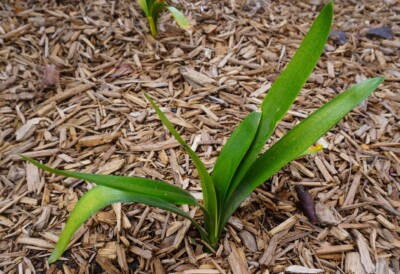
The Bush Lily is a clump-forming plant with stocky rhizomes. It has long bright green leaves that produce flower stems, which are topped with funnel-shaped flowers ranging in color from yellow to nearly red. After flowering it produces red berries. It generally takes three years for bush lilies to flower; producing long blooms that can be used for cut flowers.
- Plant Type: Herbaceous perennial
- Water Needs: Medium
- Mature Height: 1.5' - 2'
- Mature Width: 2' - 3'
- Sun Needed: Partial Shade
- USDA Zones: 9 to 11
- Colors: Bright Green
- Bloom Color: Yellow, Orange, Red
- Bloom Season: Seasonal bloomer
- Native To: South Africa
Silver Dollar Jade
Crassula arborescens 'Blue Waves'
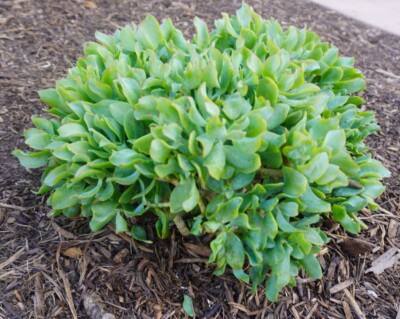
Silver Dollar Jade is a succulent shrub that forms a stout trunk and dense foliage. Wavy-edged leaves are waxy, narrow, and bright green with fine red margins. Star-shaped flowers bloom in white to pale pink. Can be grown indoors.
- Plant Type: Evergreen Succulent
- Water Needs: Low
- Mature Height: 3' - 4'
- Mature Width: 2' - 3'
- Sun Needed: Full Sun to Partial Shade
- USDA Zones: 8 to 11
- Colors: Grey-green
- Bloom Color: White
- Bloom Season: Spring, Summer
- Native To: South Africa
Fairy Crassula
Crassula multicava 'Fairy'
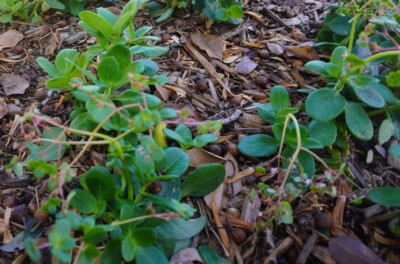
Fairy Crassula is an evergreen, low-growing plant that rarely exceeds a foot tall in the landscape. It is often even shorter when grown in dry shade. Fairy Crassula forms wide mats with glossy rounded leaves that are darker green in the shade and paler green when exposed to more sun. The leaves often have small red dots on the upper surface.
- Plant Type: Succulent
- Water Needs: Low
- Mature Height: <1'
- Mature Width: 15" - 24"
- Sun Needed: Full Sun to Partial Shade
- USDA Zones: 8 to 11
- Colors: Green
- Bloom Color: Pink and White
- Bloom Season: Winter to Spring
- Native To: South Africa
Dragon Tree
Draceana draco
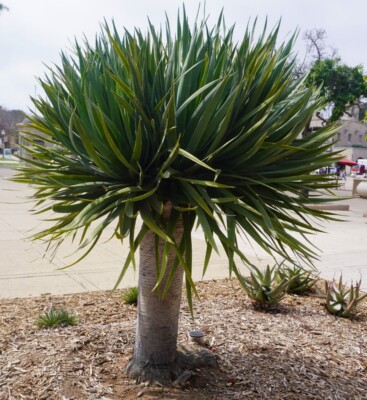
Dragon Tree species grows slowly. Over many decades its stems branch repeatedly, creating an umbrella-like shape. Its bright red fruits and red sap give the Dragon Tree its name.
- Plant Type: Palm
- Water Needs: Low
- Mature Height: 15' - 25'
- Mature Width: 15' - 25'
- Sun Needed: Full Sun to Partial Shade
- USDA Zones: 10 to 11
- Colors: Green
- Bloom Color: Green, White
- Bloom Season: Spring, Fall
- Native To: Canary Islands
Baby Echeveria
Echeveria derenbergii
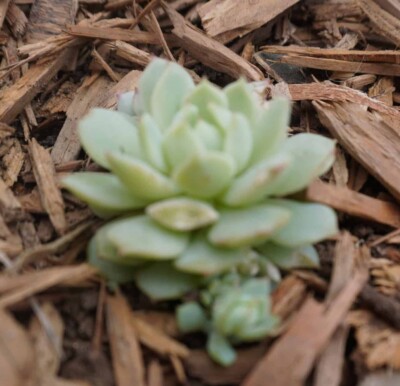
Baby Echeveria is a low-growing rosette with blue-grey leaves with red margins and produces offsets readily. It is often used as a houseplant. In warm climates it can be grown in rock gardens and crevice gardens.
- Plant Type: Succulent
- Water Needs: Low
- Mature Height: 1'
- Mature Width: 1'
- Sun Needed: Full Sun to Partial Shade
- USDA Zones: 9a to 12b
- Colors: Green, Purple
- Bloom Color: Red, Yellow
- Bloom Season: Spring
- Native To: Mexico
Echihanga Cycad
Encephalartos ferox

Echihanga Cycad's stem has been used as a source of sago, a traditional starchy foodstuff. Local people on the southeastern coast of Africa have used it for its starch content. Like other cycads, it contains a neurotoxin, which must first be carefully removed from the sago by repeated washings before the starchy product can be safely consumed.
- Plant Type: Cycad
- Water Needs: High
- Mature Height: 6'-7'
- Mature Width: 6'-7'
- Sun Needed: Full Sun to Partial Shade
- USDA Zones: 9a to 11
- Colors: Green, Brown, Red
- Bloom Color: Non-flowering
- Bloom Season: Non-flowering
- Native To: South East Africa
Mombasa Cycad
Encephalartos hildebrandtii
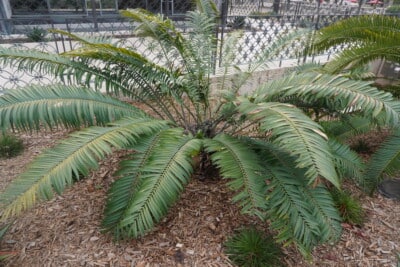
Mombasa Cycad leaves are glossy and stiff with dentate leaflets overlapping downwards and curving away from the leaf apex. Each leaflet has more than 3 teeth on margin and 2-3 spines on the tip. Mainly found on coastal evergreen bushland and dry lowland forest, in sandy plains, and rocky hill tops.
- Plant Type: Cycad
- Water Needs: Medium
- Mature Height: 18'
- Mature Width: 8'
- Sun Needed: Partial Shade
- USDA Zones: 9
- Colors: Green
- Bloom Color: Yellow-gold seeds
- Bloom Season: N/A
- Native To: Kenya, Tanzania
Pineapple Zamia
Lepidoamia peroffskyana
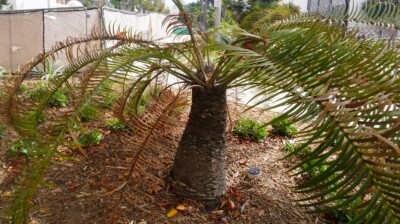
Pineapple Zamia is a beautiful fern-like cycad that has no spines or sharp leaf tips. A great plant for the shade garden, and unlike some other cycads, it reliably puts out new crowns of leaves at least once per year.
- Plant Type: Cycad
- Water Needs: Medium
- Mature Height: 8' - 12'
- Mature Width: 6' - 8'
- Sun Needed: Partial Shade
- USDA Zones: 9b
- Colors: Shiny Green
- Bloom Color: Not significant
- Bloom Season: Not significant
- Native To: New South Wales and southeastern Queensland
Chinese Fan Palm
Livistonia Chinensis
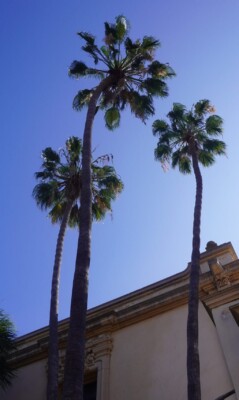
Livistonia Chinensis is often used as an ornamental tree in gardens and parks because of its fan-shaped leaves and its ability to grow well in many conditions. It can grow in a range of soils types including clay, loam, sand, acidic, and alkaline, and it can grow in both full sun and full shade.
- Plant Type: Tree
- Water Needs: Medium
- Mature Height: 20' - 50'
- Mature Width: 11' - 15'
- Sun Needed: Full Sun
- USDA Zones: 9 to 11
- Colors: Green, Brown, Black
- Bloom Color: White
- Bloom Season: Spring
- Native To: Japan, Taiwan, China, Ryukyu Islands, and Hainan
Puya alpestris
Sapphire Tower

Puya alpestris forms clumping rosettes. The name for the genus comes from the Chilean name, which was used for the species Puya chilensis and the specific name 'alpestris' is the Latin word for alpine, which references where Puya alpestris is native to in the Chilean Andes.
- Plant Type: Evergreen Succulent
- Water Needs: Low
- Mature Height: 2'-3'
- Mature Width: 3' - 5'
- Sun Needed: Full Sun
- USDA Zones: 9 to 11
- Colors: Green, Silver-grey
- Bloom Color: Turquoise
- Bloom Season: Spring
- Native To: Chile
Puya Bromeliad
Puya coerulea
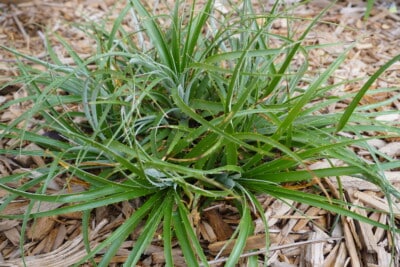
Puya Bromeliad is a large rosette-forming succulent with very attractive silver-white narrow and slightly recurved leaves that have sharp teeth on their margins. Stout silvery spikes rise several feet above the leaves bearing dark blue-purple flowers in late spring.
- Plant Type: Succulent
- Water Needs: Low
- Mature Height: 2' - 3'
- Mature Width: Spreading
- Sun Needed: Full Sun
- USDA Zones: 9
- Colors: Silver-white
- Bloom Color: Purple
- Bloom Season: Late Spring
- Native To: Chile
Traveler's Palm
Ravenala madagascariensis

Up to one quart of rain water can accumulate in the cupped base of each leaf stalk of the Traveler's Palm, thus giving rise to the common name for this plant which suggests an emergency drinking water source for travelers in need.
- Plant Type: Broadleaf evergreen
- Water Needs: Medium
- Mature Height: 30' to 50'
- Mature Width: 15' to 25'
- Sun Needed: Full Sun
- USDA Zones: 10a to 11
- Colors: Green
- Bloom Color: White
- Bloom Season: Year-round
- Native To: Madagascar
Royal Palm
Roystonea regia
Roystonea Regia palm leaf bases overlap to form a smooth region above the trunk called the "crownshaft". Royal Palms drop their dying, old leaves, about one dead leaf per month. They also produce cream colored flowers and reddish-black fruits in the summer.
- Plant Type: Evergreen Perennial
- Water Needs: Medium
- Mature Height: 50' - 70'
- Mature Width: 20' - 25'
- Sun Needed: Full Sun to Partial Shade
- USDA Zones: 10a to 11
- Colors: Green. Grey
- Bloom Color: Yellow, Cream
- Bloom Season: Summer
- Native To: Florida, Cuba
Slender Lady Palm
Rhapis humilis
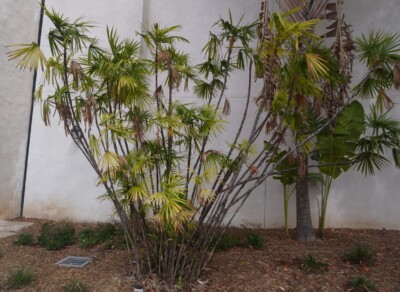
Rhapis Humilis is a palm tree that is low-growing with stems that look similar to bamboo. These bamboo-like stems are covered in fan-shaped leaves. Its flowers give way to small, single-seeded berries.
- Plant Type: Evergreen tree
- Water Needs: Medium
- Mature Height: 15' - 20'
- Mature Width: 4' - 6'
- Sun Needed: Partial Shade
- USDA Zones: 6b to 9a
- Colors: Green, Brown
- Bloom Color: White
- Bloom Season: Spring
- Native To: China
Blue Chalksticks
Senecio serpens
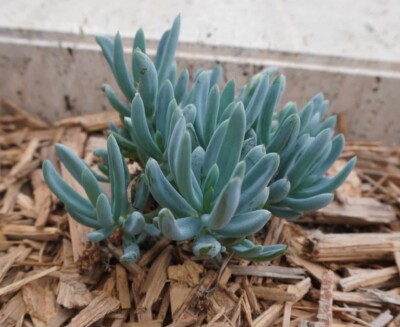
Senecio serpens is a small succulent that grows low to the ground and branches from the base. Its powdery blue succulent leaves and roots grow out from these its stems. It produces small white flowers in the summer and fall.
- Plant Type: Evergreen Succulent
- Water Needs: Low, Moderate
- Mature Height: 6" - 12"
- Mature Width: 2' - 3'
- Sun Needed: Full Sun to Partial Shade
- USDA Zones: 7 to 10
- Colors: Blue-green, Blue-grey
- Bloom Color: White
- Bloom Season: Summer, Fall
- Native To: South Africa
Princess Flower
Tibouchina urvilleana
Tibouchina urvilleana is an evergreen shrub. Its flowers are round and a shade of deep purple that bloom from summer through fall. Its leaves are green with brown velvety hairs.
- Water Needs: Medium
- Mature Height: 5' - 18'
- Mature Width: 3' - 10'
- Sun Needed: Full Sun to Partial Shade
- USDA Zones: 9 to 11
- Colors: Green, Brown
- Bloom Color: Purple
- Bloom Season: Summer, Fall
- Native To: Brazil